Manufacturability Testing (Design For Manufacturing)
Blog Post 1.02.01 - Eliminate Shop Floor Rework with Manufacturability Testing
What is Manufacturability Testing and how can it reduce and eliminate shop floor rework? Read More ...

Global Edge Video Blog-1.02

Eliminate Shop Floor Rework with Manufacturability Testing
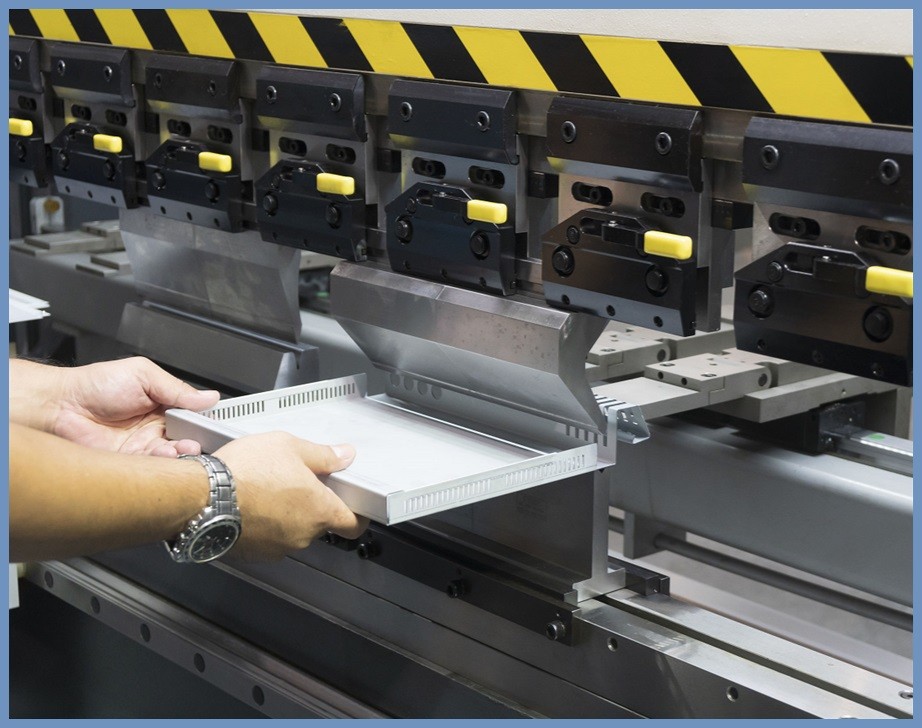
Having to perform shop floor rework can be a time consuming and costly proposition. There are generally two factors that drive shop floor rework with one being mistakes made on the shop floor, but the other that can be contributed to a design flaw. Design flaws can include the following:
Material
- Wrong Material Type
- Wrong Material Thickness
- Wrong Material Finish
Bending Machine Tool Capabilities
- Tooling Limits
- Bend Angle Exceeds Allowable Limits
- Part Exceeds Bend Tonnage Limit
- Part Flange Too Big or Too Small
- Internal Bend Too High
Hole / Embossment / Louver / Special Features Locations
- Pem Hole Too Close to Bend Line
- Embossment / Louver Too Close to Bend Line
- Special Feature Interferes with Flange
Hardware Specifications
- Not Proper Matching Hardware
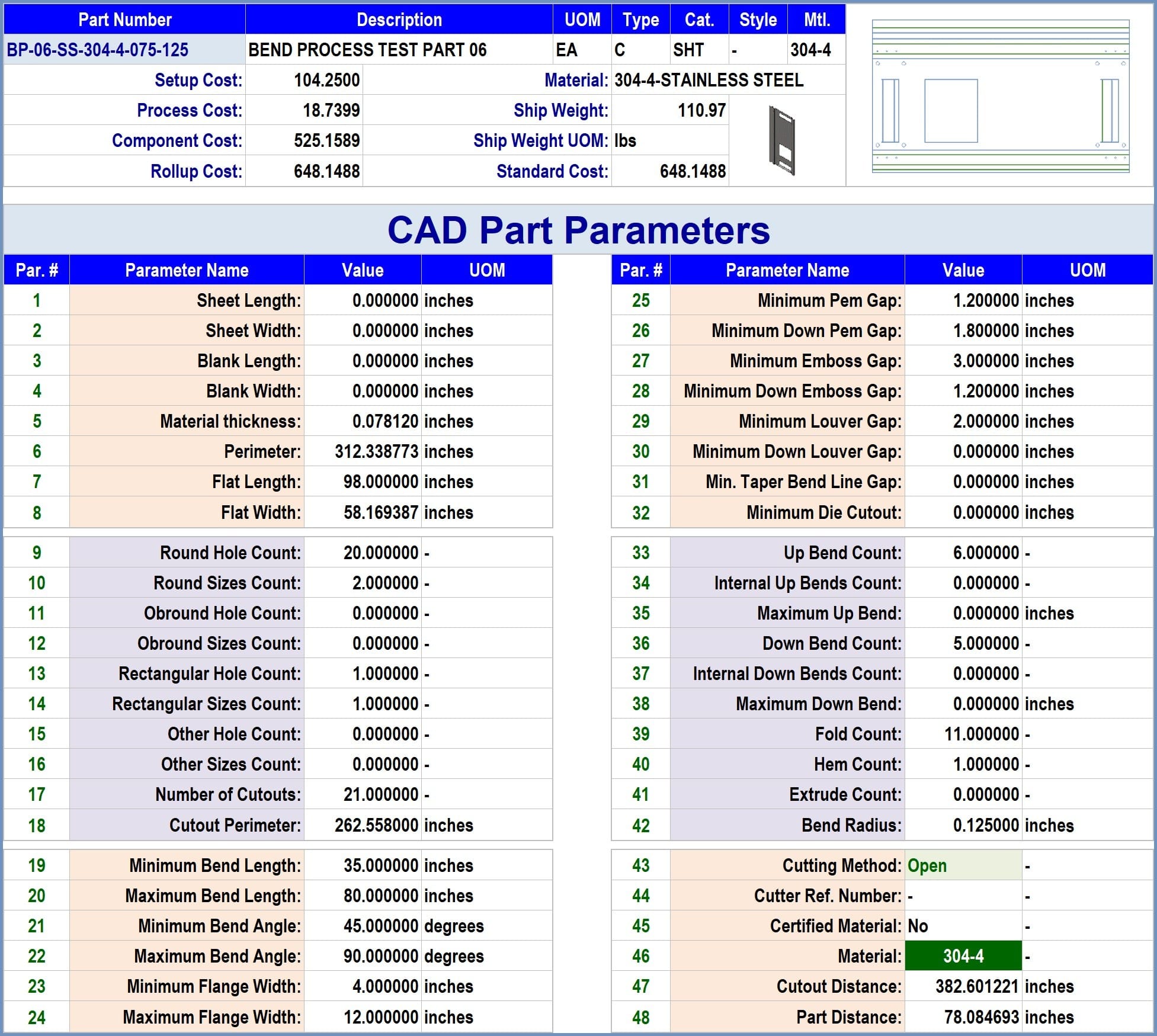
Global Edge Engineering Assistant provides innovative capabilities to identify and automatically flag potential design flaws before a sheet metal part reaches the shop floor. This process starts with the automated analysis of a sheet metal CAD part to import and record the following CAD part parameters:
- Material / Thickness / Part Weight / Bend Radius
- Blank / Flat (Length & Width)
- Cutouts / Holes (Count & Size)
- Minimum / Maximum Bend Length
- Minimum / Maximum Bend Angle
- Minimum / Maximum Flange Width
- Minimum Pem Hole to Bend Line Gap
- Minimum Embossment to Bend Line Gap
- Minimum Louver to Bend Line Gap
- Maximum Up / Maximum Down Bend
- Fold / Hem / Extrude Counts
- Minimum Taper / Die Cut to Bend Line Gap
These CAD part parameters are subsequently stored in the Global Edge database to serve as a foundation for a “Manufacturability Testing” process. The CAD part parameters include identification up and down bends counts, location of Pem Hole and Louver distance from a bend line, including cutout counts and cutout perimeters, etc.
Sample CAD Part Parameters
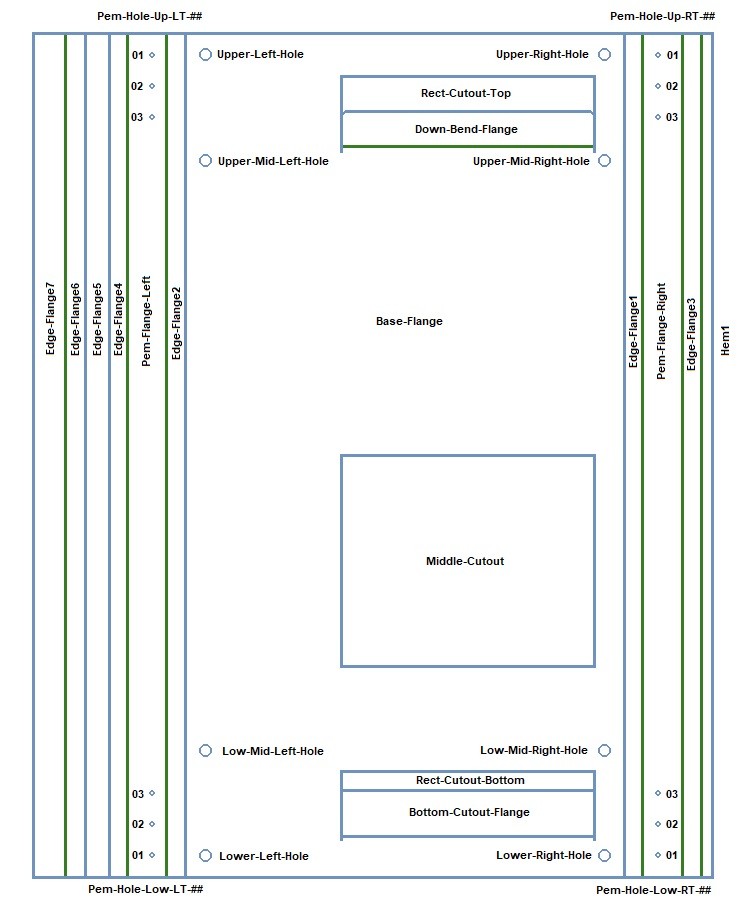
Sample DXF Flat File
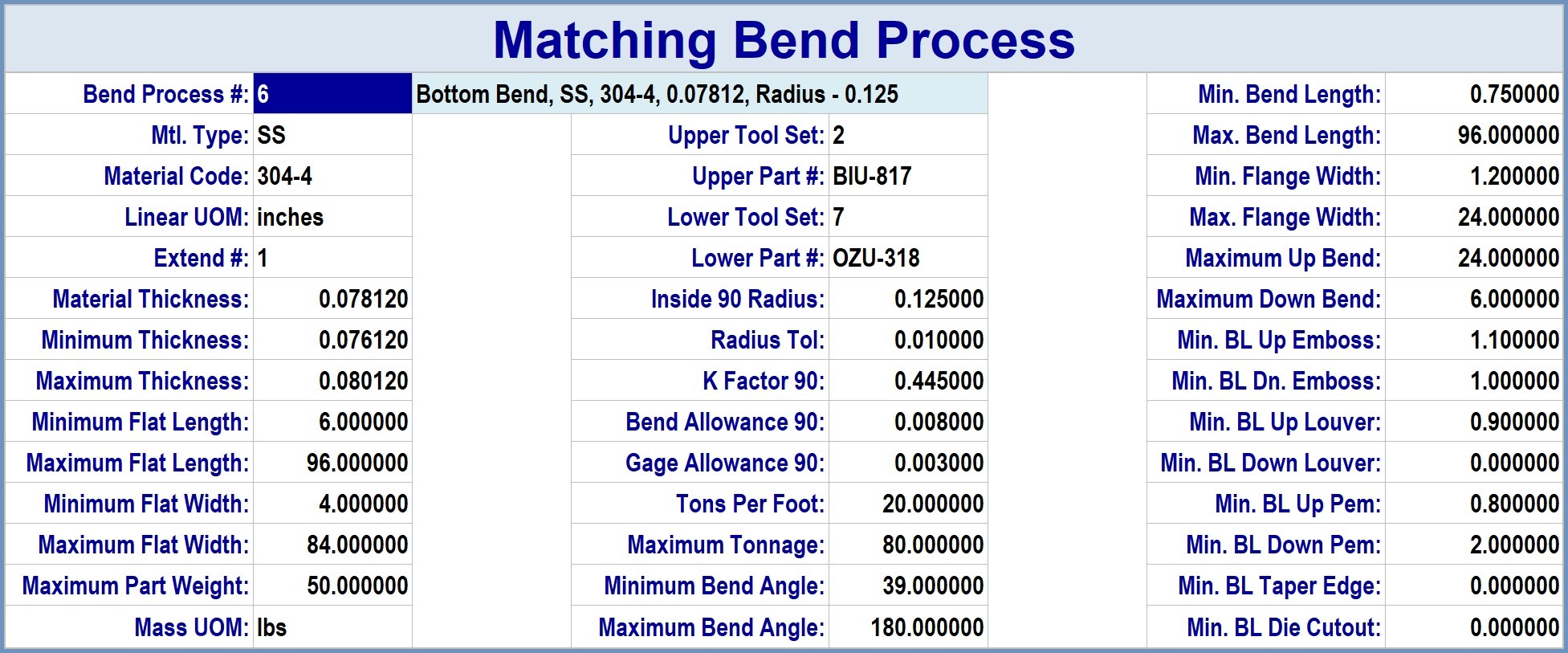
As part of the CAD part analysis, Global Edge Engineering Assistant automatically identifies and matches the sheet metal part with the proper user definable Bend Processes as illustrated with the following Sample Bend Process:
As Global Edge Engineering Assistant completes the importation and storage of the CAD part parameters, the software automatically generates routings based on those parameters:
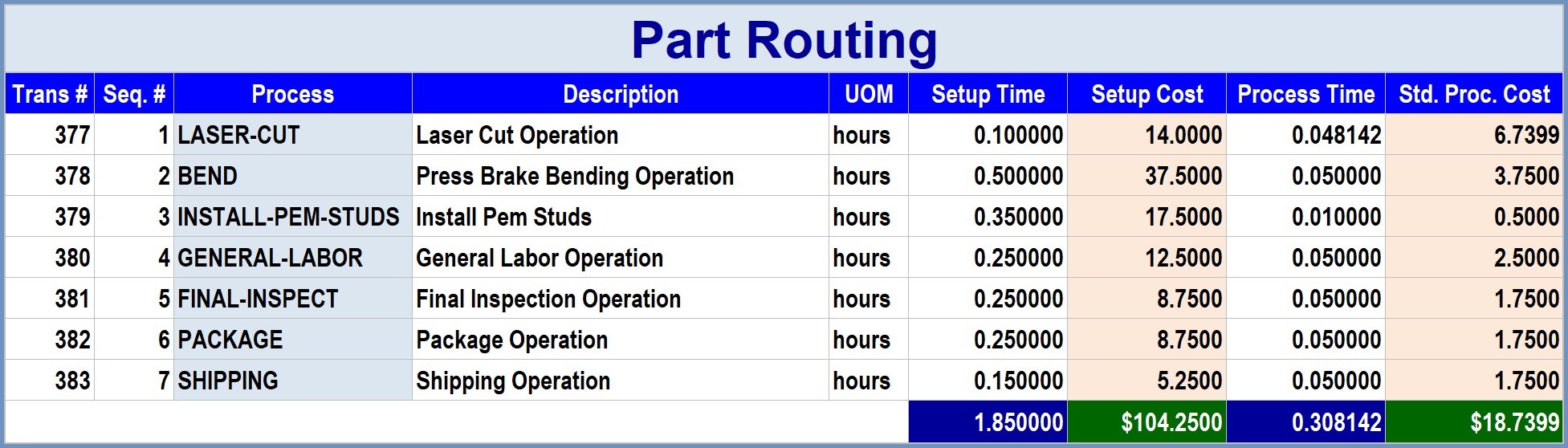
During the generation of the routings, Global Edge Engineering Assistant automatically determines if the sheet metal part can be successfully fabricated with each of the routing steps. For example, with the “Press Brake Bending Operation”, the software automatically determines whether the sheet metal part can be successfully bent comparing the CAD Part Parameters with the matching Bend Process. This includes the automatic execution of a “Manufacturability Test” that allows the engineer to view the test results:
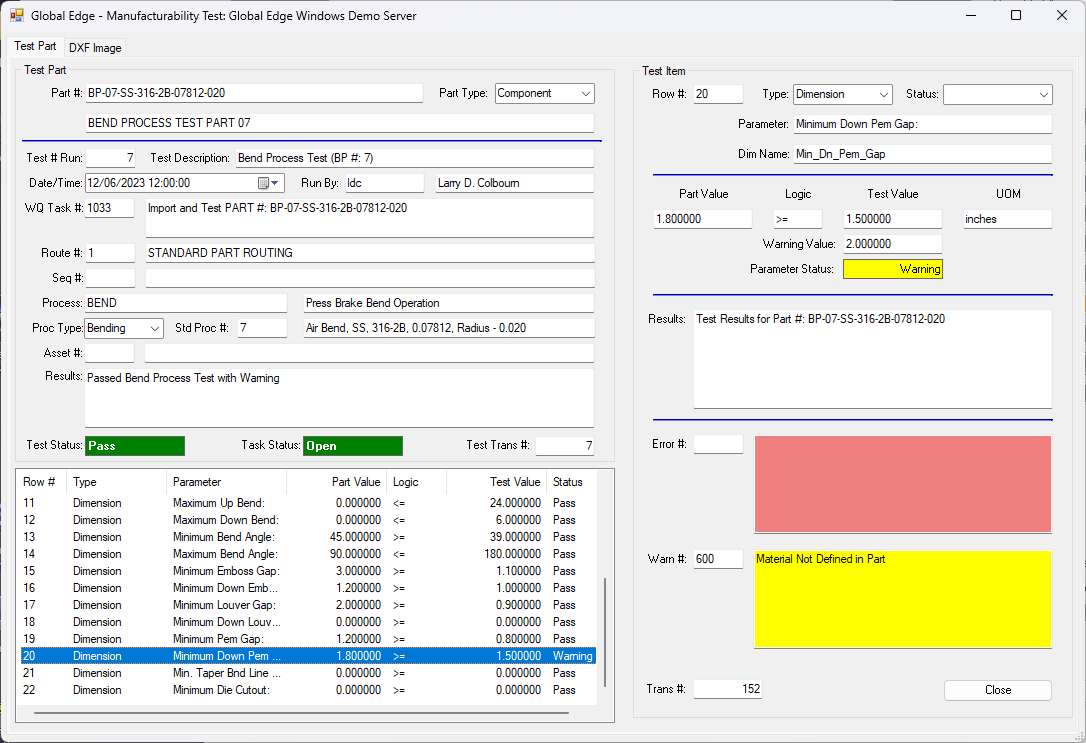
The above and below example includes 22 tests that were performed on the selected part. The highlighted test below (Minimum Down Pem Gap) detected a warning that “Feature Within Warning Gap”. The matching Bend Process for the sheet metal part requires the Minimum Down Pem Gap is at least 1.500000 inches from the nearest bend line. The detected gap with the selected sheet metal part is 1.800000 inches, which indicates the gap is allowable. However, a Warning Message is detected because ideally with the matching Bend Process indicates that the Minimum Down Pem Gap should ideally be at least 2.000000 inches.
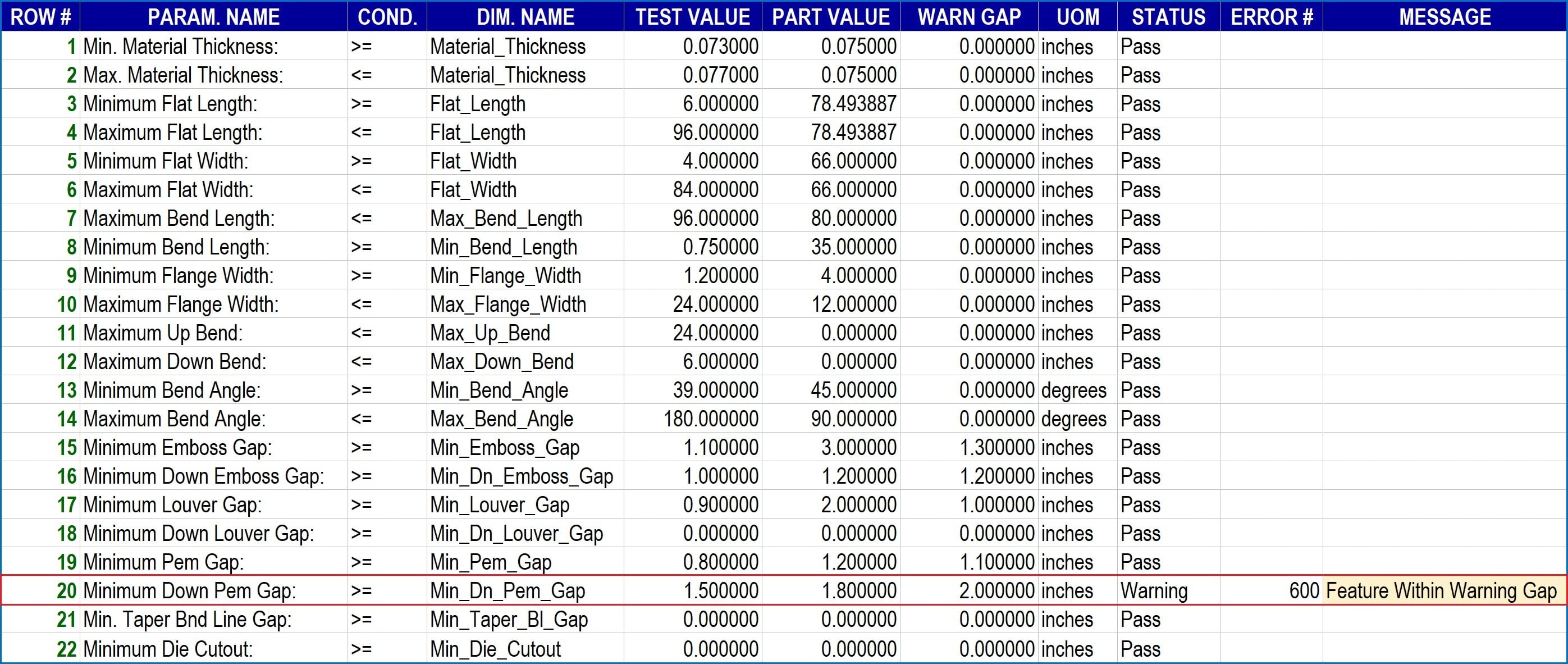
When a manufacturability test fails one or more tests, the engineer can make the appropriate change(s) to the necessary 3D CAD Sheet Metal Model and repeat the Manufacturability Test until the errors are corrected. Global Edge Engineering Assistant provides an innovative software tool that helps eliminate shop floor rework by getting things right the first time before a part reaches the shop floor.
Summary
Global Edge Engineering Assistant can save your manufacturing operation significant time and money by reducing and eliminating shop floor rework. This starts with the automated analysis and testing of your sheet metal parts within engineering based on the capabilities of your shop floor. Before a new part design reaches the shop floor, Global Edge Engineering Assistant helps get it right the first time with the following features and benefits:
- Automated Analysis of Customer Specifications / CAD Drawings
- Automated Routing Generation from CAD Part Parameters
- Automated Manufacturability Testing
Eliminating Shop Floor Rework through Manufacturability Testing
Understanding Manufacturability Testing and Its Role in Streamlining Production
Shop floor rework is a persistent challenge in manufacturing environments, often consuming valuable time and resources while driving up costs and impacting delivery schedules. While mistakes on the shop floor are a notable cause, a significant proportion of rework results from upstream design flaws. These design flaws can be subtle or overt, ranging from incorrect specifications to incompatibilities between the intended design and available tooling or materials. One powerful approach to mitigating—and even eliminating—shop floor rework is through a process known as manufacturability testing.
What is Manufacturability Testing?
Manufacturability testing is a systematic evaluation process applied during product design and development stages to ensure that a part or assembly can be manufactured efficiently, reliably, and economically using available processes, tools, and resources. The goal is to identify and resolve potential barriers to production before a design reaches the shop floor, preventing costly and disruptive rework later in the manufacturing cycle.
This testing scrutinizes the proposed design for conformance with manufacturing capabilities, standards, and best practices. It typically includes simulations, virtual prototyping, physical trials, and expert reviews across multiple discipline design engineering, process engineering, tooling, and quality assurance—to surface any issues that could impede successful fabrication or assembly.
How Manufacturability Testing Reduces and Eliminates Shop Floor Rework
By rigorously evaluating a design’s manufacturability prior to production, organizations can proactively address issues that would otherwise manifest as rework. The process achieves this through several key mechanisms:
- Early Detection of Design Flaws: Manufacturability testing brings potential problems to light before they become embedded in physical parts. By analyzing material selections, dimensions, tolerances, and intended processes, the design team can spot errors or incompatibility and correct them in the digital or prototype stage.
- Validation against Shop Floor Reality: The testing process verifies that the design is compatible with actual tooling, machinery, and expertise available on the shop floor. This includes checking bending limits, material handling capabilities, and hardware specifications, ensuring the design will not outpace the shop’s operational capacity.
- Cross-Functional Collaboration: Manufacturability testing is rarely a solitary effort. It involves collaboration among design engineers, manufacturing experts, and quality professionals, pooling their collective knowledge to vet the design. This reduces the risk of siloed decisions that lead to unanticipated shop floor issues.
- Standardization and Best Practices: By embedding manufacturability criteria into design standards, organizations promote repeatable processes and reduce variability. This streamlines production and minimizes the chances of producing non-conforming products.
- Feedback Loops: Manufacturability testing builds feedback loops between design and manufacturing teams, fostering a culture of continuous improvement. Lessons learned from previous rework incidents are captured and fed into future design cycles, lowering the probability of recurrence.
Common Design Flaws Addressed by Manufacturability Testing
Design flaws are often the root cause of shop floor rework. Manufacturability testing addresses the following specific categories of issues:
Material Selection
- Wrong Material Type: Selecting a material incompatible with shop floor processes (e.g., using a grade of steel that cannot be bent or welded with available equipment) will inevitably result in either rework or outright rejection. Manufacturability testing ensures material choices are feasible and available.
- Wrong Material Thickness: If a part is designed with a material thickness that cannot be processed, whether too thick for bending machines, or too thin for structural integrity, the testing process will flag these mismatches for correction.
- Wrong Material Finish: Specifying a finish that is either unattainable with current shop capabilities or inappropriate for subsequent steps (such as painting or plating) can jeopardize the entire project. Manufacturability testing checks for finish compatibility, availability, and sequence alignment.
Bending Machine Tool Capabilities
- Tooling Limits: Every bending machine has distinct tooling limitations, such as maximum and minimum radii or flange lengths. Manufacturability testing examines the design to ensure it can be achieved given these constraints, avoiding impossible bends or excessive tool wear.
- Bend Angle Exceeds Allowable Limits: If a part requires a bend angle that is beyond the equipment’s capacity, manufacturability testing will prompt a redesign to align with actual machine capabilities.
- Part Exceeds Bend Tonnage Limit: Bending machines are rated for maximum force, or tonnage. Overlooking this can lead to machine failure or part rejection. Through testing, designers validate that the part’s geometry and material can be bent within these operational bounds.
- Part Flange Too Big or Too Small: Excessively large or small flanges may not fit into tooling or can cause instability during processing. Manufacturability testing confirms that flanges are dimensioned appropriately.
- Internal Bend Too High: High internal bends sometimes exceed the reach or capacity of bending tools. The testing process identifies these before they result in non-conforming parts.
Hole, Embossment, Louver, and Special Feature Locations
- Pem Hole Too Close to Bend Line: Fastener holes (such as Pem holes) placed too close to bend lines can deform during bending, compromising part strength and quality. Manufacturability testing checks these locations and recommends adjustments where necessary.
- Embossment / Louver Too Close to Bend Line: Decorative or functional features like embossments and louvers must be positioned to avoid interference with bending operations; manufacturability testing verifies appropriate spacing.
- Special Feature Interferes with Flange: Unique features may create obstacles during forming or assembly. Testing processes simulate these scenarios to prevent interference and ensure smooth production.
Hardware Specifications
- Not Proper Matching Hardware: Assembly issues often arise when hardware specifications are mismatched with the design or with existing shop inventory. Manufacturability testing confirms that hardware choices are compatible and available, preventing delays and rework.
Implementing Manufacturability Testing: Best Practices
A successful manufacturability testing program is rooted in organizational commitment and process discipline. Some best practices include:
- Integrate Early in the Design Cycle: Begin manufacturability assessments at the concept stage and continue through detailed design. The earlier issues are caught, the less expensive and disruptive they are to fix.
- Use Digital Tools and Simulation: Adopt CAD/CAM software with built-in manufacturability checks. Simulating production processes can visually flag risks that may be easy to miss with manual review.
- Standardize Design Guidelines: Develop and share clear design-for-manufacturability guidelines based on historical rework incidents and shop capabilities.
- Foster Collaboration: Encourage regular communication between design, engineering, and shop floor teams. Involve operators and technicians in design reviews for practical, hands-on insight.
- Document and Track Issues: Maintain records of manufacturability problems and resolutions to inform future projects and improve organizational knowledge.
Conclusion: The Path to Rework-Free Manufacturing
Manufacturability testing is not a one-time event but an integrated, ongoing process that empowers manufacturers to avoid the pain and expense of shop floor rework. By systematically evaluating designs against shop floor realities—material capabilities, tooling constraints, feature placements, and hardware specifications—organizations can deliver products that are right the first time. This proactive approach enhances productivity, reduces costs, fosters innovation, and ensures customer satisfaction.
In an era where margins are thin and competition intense, eliminating shop floor rework is not just a matter of operational efficiency—it’s a strategic imperative. Manufacturability testing provides the blueprint for achieving this, translating design intent into production success with minimal friction and maximum return. When adopted comprehensively, it transforms reactive firefighting into proactive excellence, setting the stage for future growth and reliability in manufacturing.