Automated CAD Model Configuration
Blog Post 5.01.02 - Configure Parts with Design For Manufacturing Capabilities
Automate the configuration of simple to complex products incorporating innovative Design For Manufacturing capabilities. Read More ...
Global Edge Video Blog-5.01

Video can’t be displayed
Configure Parts with Design for Manufacturing Capabilities
Global Edge Engineering Assistant provides innovative software technology that is built around a powerful Configuration Engine that is combined with "Manufacturability Testing" functionality to facilitate effective Design For Manufacturing capabilities. As your engineers configure products to various sizes, Global Edge Engineering Assistant provides the ability to test each part to help ensure it can be successfully fabricated before it leaves engineering.
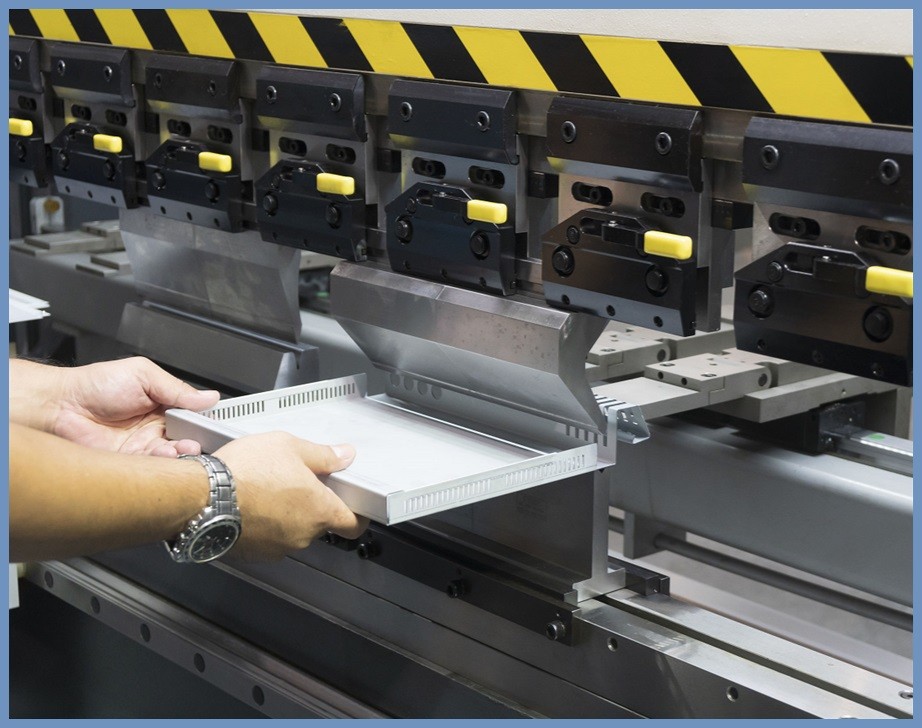
This is accomplished with Manufacturability Test that analyzes and the following CAD Part Parameters and compares them with the proper process that matches the parameters of your bending machine tools:

- Material / Thickness / Part Weight / Bend Radius
- Blank / Flat (Length & Width)
- Cutouts / Holes (Count & Size)
- Minimum / Maximum Bend Length
- Minimum / Maximum Bend Angle
- Minimum / Maximum Flange Width
- Minimum Pem Hole to Bend Line Gap
- Minimum Embossment to Bend Line Gap
- Minimum Louver to Bend Line Gap
- Maximum Up / Maximum Down Bend
- Fold / Hem / Extrude Counts
- Minimum Taper / Die Cut to Bend Line Gap
Automating Product Configuration with Innovative Design For Manufacturing Capabilities
Unlocking Manufacturing Efficiency and Quality with Global Edge Engineering Assistant
In the rapidly evolving landscape of modern manufacturing, the ability to configure parts and products efficiently—while ensuring manufacturability—is critical for businesses seeking to maintain a competitive edge. Introducing automation and intelligent software into the engineering workflow not only accelerates product development cycles but also safeguards the integrity and feasibility of manufactured components from concept to completion.
One of the most groundbreaking technological advancements in this arena is Global Edge Engineering Assistant, a sophisticated software platform designed to automate the configuration of products ranging from simple to highly complex, all while integrating innovative Design For Manufacturing (DFM) capabilities. At the heart of this system lies a robust Configuration Engine, synergistically combined with advanced Manufacturability Testing, enabling engineers to design with confidence and agility.
Configuration Engine: The Backbone of Automated Product Development
The Configuration Engine within Global Edge Engineering Assistant is a central element that revolutionizes the way engineers approach product design and customization. This engine is built to handle vast arrays of product variables, empowering users to efficiently configure parts and assemblies to meet specific requirements—be they dimensional, functional, or aesthetic.
Key features of the Configuration Engine include:
- Rule-based configuration: The configuration engine utilizes embedded logic, allowing predefined rules and constraints to automatically guide the design process. This ensures that only viable configurations are created, reducing errors and rework.
- Scalability: Whether configuring a simple bracket or a multi-part enclosure with intricate features, the engine adapts to the complexity of the task, supporting both modular and highly customized designs.
- Integration with CAD tools: Seamlessly connected with computer-aided design software, the engine translates configuration data into precise CAD models, ready for manufacturability analysis.
The Configuration Engine does more than just automate repetitive tasks; it enables engineers to explore innovative solutions, accelerate prototyping, and respond quickly to customer-driven changes—all while maintaining strict adherence to manufacturing constraints.
Manufacturability Testing: Bridging Design and Production
While automating configuration is vital, ensuring that each part is manufacturable is equally important. The Manufacturability Testing module integrated within Global Edge Engineering Assistant acts as a virtual quality gate, analyzing every configured part before it transitions from engineering to the shop floor.
How Manufacturability Testing Works:
- Parameter analysis: The system examines a comprehensive set of CAD Part Parameters, comparing each against a database of manufacturing processes, machine tool capabilities, and best practices.
- Instant feedback: As engineers adjust designs—whether in terms of size, material, or feature complexity—the Assistant provides immediate feedback regarding manufacturability, highlighting any potential issues.
- Process matching: By correlating part parameters with the capacities of available bending machines and other fabrication equipment, the software ensures that every design can be feasibly manufactured with existing resources.
This fusion of configuration and manufacturability analysis dramatically reduces the likelihood of costly downstream problems, such as unworkable parts or production bottlenecks, and fosters a culture of design excellence.
Critical CAD Part Parameters for Manufacturability
For manufacturability testing to be effective, it must rigorously assess a variety of part attributes. Global Edge Engineering Assistant’s testing module analyzes the following key CAD Part Parameters, each one pivotal in determining the viability of a part for production:
- Material / Thickness / Part Weight / Bend Radius: These fundamental characteristics influence the selection of manufacturing processes and tools. For example, thicker materials may require specialized equipment or additional setup, while the bend radius must fall within machine constraints to avoid cracking or warping.
- Blank / Flat (Length & Width): The dimensions of the part in its flattened state affect material utilization and cutting strategies. Excessive flat sizes may exceed machine bed capabilities or lead to material waste.
- Cutouts / Holes (Count & Size): The number and size of holes or cutouts dictate tooling requirements and impact structural integrity. The system flags configurations with impractically small or large holes, or excessive counts that could hinder manufacturability.
- Minimum / Maximum Bend Length: Ensuring bends are within the operable range of the bending machines prevents mis-fabrication and supports consistent part quality.
- Minimum / Maximum Bend Angle: Some machines have limits on how sharp or obtuse a bend can be. The Assistant compares the intended angles with machine specifications to ensure compliance.
- Minimum / Maximum Flange Width: Flanges that are too narrow may lead to weak joints, while overly wide ones could complicate assembly or interfere with adjacent features.
- Minimum Pem Hole to Bend Line Gap: Minimum spacing between PEM insert holes and bend lines is crucial to prevent deformation and maintain insert integrity.
- Minimum Embossment to Bend Line Gap: Embossed features must be positioned with enough clearance from bends to avoid material failure or process complications.
- Minimum Louver to Bend Line Gap: Louvers, which enhance ventilation or aesthetics, require adequate separation from bend lines to ensure manufacturability.
- Maximum Up / Maximum Down Bend: The system checks the feasibility of complex bend sequences, ensuring that multiple up or down bends can be executed without tool collisions or excessive stress.
- Fold / Hem / Extrude Counts: The counts of folds, hems, and extrusions are cross-checked against process limits. Excessive features may necessitate specialized tooling or multiple operations.
- Minimum Taper / Die Cut to Bend Line Gap: Tapered features or die cuts must be appropriately distanced from bend lines to prevent weakening the part or producing out-of-tolerance geometry.
Innovative DFM Capabilities: Beyond Compliance
Global Edge Engineering Assistant does not stop at basic manufacturability checks. It incorporates forward-thinking DFM strategies that foster innovation and ongoing improvement:
- Continuous learning: As more parts are configured and produced, the system refines its knowledge base, learning which parameters lead to successful fabrication and which are problematic.
- Process customization: Companies can tailor the Assistant to reflect their specific equipment profiles, materials, and production workflows, ensuring recommendations are always relevant.
- Design optimization: Engineers are encouraged to explore new design approaches, leveraging automated feedback to push boundaries without compromising manufacturability.
Benefits of Automated DFM Integration
The integration of automated product configuration with manufacturability testing delivers tangible benefits:
- Reduced time-to-market: Engineers can iterate designs rapidly, confident that manufacturability checks will prevent costly mistakes, expediting the move from concept to production.
- Cost savings: Early detection of manufacturability issues minimizes scrap, rework, and production delays, translating to substantial cost savings.
- Enhanced product quality: Automated DFM ensures that every configured part meets rigorous standards, boosting consistency and customer satisfaction.
- Empowered innovation: Engineers can experiment with new geometries and features, knowing that real-time manufacturability feedback supports their creative process.
Conclusion
As manufacturing grows increasingly complex and customer demands for customization rise, the importance of automating product configuration and integrating Design For Manufacturing capabilities cannot be overstated. Global Edge Engineering Assistant stands out as a transformative solution, marrying a powerful Configuration Engine with comprehensive Manufacturability Testing to enable engineers to confidently create—from the simplest bracket to the most intricate enclosure—parts that will perform reliably in production.
By embracing such innovative software technology, companies can streamline their engineering workflows, drive down costs, and unleash new levels of creativity—all while maintaining the utmost standards of manufacturability and quality. The future of manufacturing is not just automated; it is intelligently configured, rigorously tested, and endlessly innovative.
Increase Profitability with Innovative Design for Manufacturing Capabilities
To see a demonstration as to how Global Edge Engineering Assistant can increase your engineering capacity, click on the link below to schedule a software demonstration.