Automated CAD Model Analysis
Blog Post 6.01.02 - Test Part Manufacturability through Automated CAD Part Analysis
Automatically test your sheet metal parts for manufacturability before reaching the shop floor. Read More ...
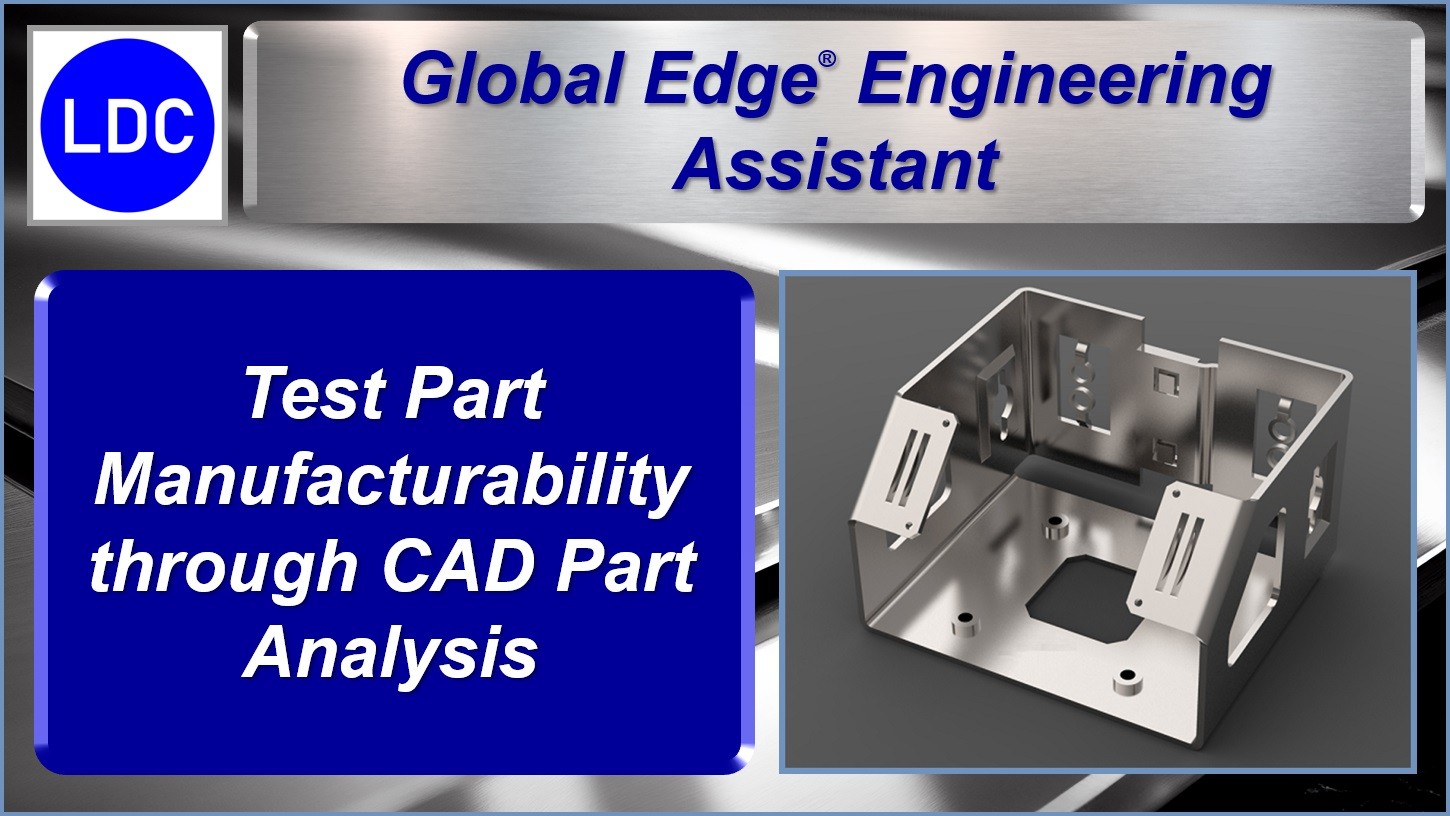
Global Edge Video Blog-6.01

Test Part for Manufacturability through Automated CAD Part Analysis
Global Edge Engineering Assistant provides innovative software technology that allows you to automatically test your CAD Sheet Metal Parts to make sure they can be successfully fabricated before they leave engineering and reach the shop floor. This starts with the automated analysis of your CAD parts and storage of complete CAD Part Parameters.
These CAD Part Parameters include the necessary information required to perform a "Manufacturability Test" that compares the CAD Part Parameters with the parameters of your bending machine tools. These CAD Part Parameters include:
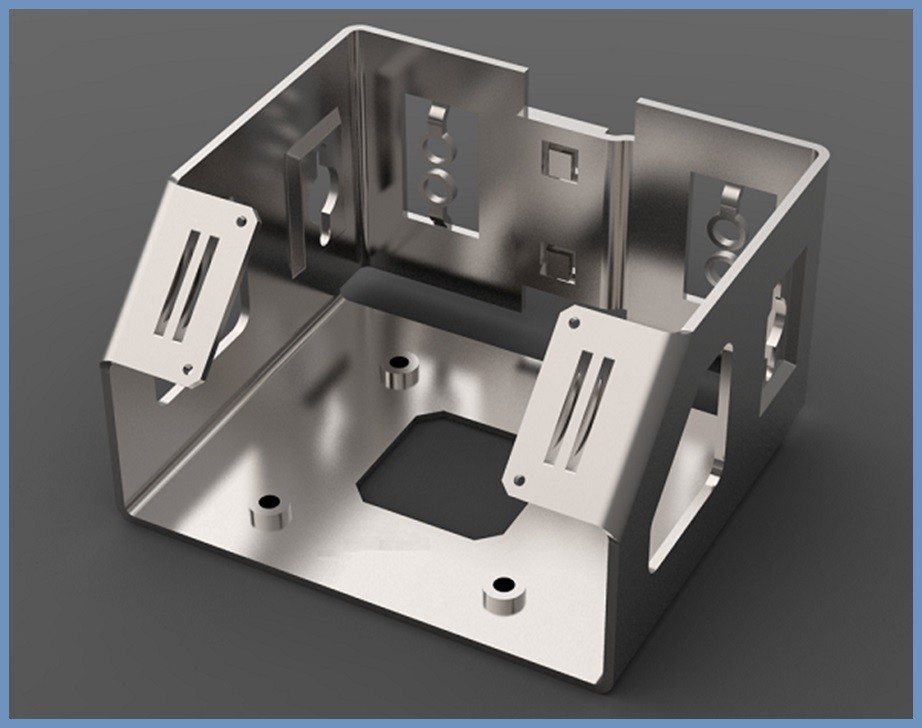
- Material / Thickness / Part Weight / Bend Radius
- Blank / Flat (Length & Width)
- Cutouts / Holes (Count & Size)
- Minimum / Maximum Bend Length
- Minimum / Maximum Bend Angle
- Minimum / Maximum Flange Width
- Minimum Pem Hole to Bend Line Gap
- Minimum Embossment to Bend Line Gap
- Minimum Louver to Bend Line Gap
- Maximum Up / Maximum Down Bend
- Fold / Hem / Extrude Counts
- Minimum Taper / Die Cut to Bend Line Gap

Automated CAD Model Analysis for Sheet Metal Manufacturability
Ensuring Fabrication Success Before Reaching the Shop Floor
Introduction
In the fast-paced world of manufacturing, the ability to identify and address potential fabrication issues before parts reach the shop floor is a game-changer. The rise of automated CAD model analysis offers engineers unparalleled capabilities to streamline the design-to-production workflow, particularly for sheet metal parts. By leveraging advanced software tools, such as Global Edge Engineering Assistant, organizations can reliably test CAD sheet metal parts for manufacturability, reducing costly errors, minimizing waste, and enhancing overall productivity.
The Importance of Manufacturability Testing
Manufacturability testing ensures that a part designed in CAD can be successfully fabricated with available machine tools, materials, and processes. Traditionally, manufacturability checks were performed manually by experienced engineers—a time-consuming process prone to human error. Automated analysis transforms this paradigm, allowing for rapid, repeatable, and comprehensive evaluations.
Automated manufacturability testing offers several key benefits:
- Early Error Detection: Identifies issues at the design stage before physical resources are committed.
- Cost Reduction: Prevents costly rework, scrap, and delays.
- Process Optimization: Ensures parts are compatible with available fabrication equipment and tooling.
- Improved Collaboration: Facilitates communication between design and manufacturing teams through standardized parameters.
Global Edge Engineering Assistant: An Innovative Approach
Global Edge Engineering Assistant exemplifies innovation in automated manufacturability testing. Its software technology is specifically tailored to CAD sheet metal parts, providing a seamless workflow from design to fabrication readiness. The cornerstone of its capability lies in automated analysis and comprehensive storage of CAD part parameters.
Automated Analysis of CAD Parts
Once a CAD model is created, the software automatically extracts and analyzes essential parameters from the design. Every dimension, feature, and attribute relevant to manufacturability is cataloged, enabling a holistic evaluation against the capabilities of shop floor equipment.
Storage of Complete CAD Part Parameters
Rather than relying solely on visual inspection or basic geometric checks, the Global Edge Engineering Assistant stores a full suite of CAD Part Parameters. These parameters form the basis of the Manufacturability Test—a comparison between the intended design and the physical limitations or tolerances of the bending machine tools and other fabrication equipment.
Key CAD Part Parameters for Manufacturability Testing
A robust manufacturability evaluation requires detailed information about each part. The following parameters are extracted and analyzed:
- Material, Thickness, and Part Weight: Ensures compatibility with available stock materials and machine load capacities.
- Matching Bend Process: Checks whether the material and thickness can be bent, folded, or cut with the intended tooling.
- Bend Radius: Verifies that the bend radius matches tool capabilities, preventing cracking or improper bends.
- Blank/Flat (Length & Width): Checks if the unfolded part fits within the cutting and bending machines’ bed sizes.
- Cutouts and Holes (Count & Size): Ensures feature sizes are within machine tolerances and can be produced with available tooling.
- Minimum/Maximum Bend Length: Confirms that each bend length is within the operational limits of the press brake or bending machine.
- Minimum/Maximum Bend Angle: Evaluates if planned bend angles can be achieved without material failure or tool interference.
- Minimum/Maximum Flange Width: Assesses whether flange widths can be formed without warping or tool misalignment.
- Minimum Pem Hole to Bend Line Gap: Ensures sufficient distance between Pem fasteners and bend lines to prevent interference or tool collision.
- Minimum Embossment to Bend Line Gap: Checks clearances for forming embossments without distorting adjacent bends.
- Minimum Louver to Bend Line Gap: Verifies louvers are positioned for both aesthetics and manufacturability.
- Maximum Up/Maximum Down Bend: Reviews whether the extent of upward or downward bends are suitable for equipment and material.
- Fold/Hem/Extrude Counts: Tallies complex features to ensure all can be reliably fabricated without process bottlenecks.
- Minimum Taper/Die Cut to Bend Line Gap: Analyzes clearances for tapers and die cuts in proximity to bends, preserving part integrity.
The Manufacturability Test Process
The manufacturability test involves automated comparison of the extracted CAD Part Parameters against a database of machine tool capabilities and shop floor restrictions. If a parameter does not conform—such as a bend angle exceeding machine capacity or a flange width too narrow for tooling—the system flags the issue and suggests corrective actions.This process is iterative and dynamic. Engineers can instantly update designs in CAD, re-run the manufacturability test, and receive feedback until all criteria are met. This continuous loop of design and validation ensures every part that leaves engineering is production-ready.
Advantages of Automated Manufacturability Analysis
By integrating automated manufacturability testing early in the design phase, companies realize numerous advantages:
- Reduced Lead Times: Faster transition from design to production means shorter project timelines.
- Improved Quality Assurance: Only validated, manufacturable parts proceed to fabrication, enhancing product reliability.
- Resource Efficiency: Minimizes material waste and maximizes machine utilization.
- Empowered Engineers: Frees up engineering talent to focus on innovation rather than repetitive checks.
- Enhanced Communication: Structured parameters foster meaningful collaboration between design, engineering, and manufacturing teams.
Conclusion
Automated CAD model analysis for sheet metal manufacturability is revolutionizing the way engineered parts are readied for fabrication. With tools like the Global Edge Engineering Assistant, manufacturers can proactively test every aspect of their CAD designs, store comprehensive parameters, and guarantee compatibility with shop floor equipment. This robust approach ensures only manufacturable, high-quality parts progress to production, driving efficiency, cost savings, and innovation across the organization.