Spreadsheet Integration
Blog Post 7.03.01 - Supplement Your Spreadsheets with Advanced Technology
Utilize advanced Spreadsheet Integration software technology to reduce spreadsheet dependency. Read More ...

Global Edge Video Blog-7.03
Video can’t be displayed
Supplement Your Spreadsheets with Advanced Technology
Most manufacturing companies in some fashion utilize Excel spreadsheets for a wide range business processes and procedures. As capable and useful spreadsheets are, they are also normally unconnected databases of information. As spreadsheets become more sophisticated, they start to contain more and more tribal knowledge.
The challenge is to then share information between different information systems. For example, with a quoting spreadsheet, updating current time and material costs becomes more difficult to maintain. While in many cases is does not make sense to replace a sophisticated quoting spreadsheet. Global Edge Engineering Assistant provides innovative capabilities that can integrate and map the latest ERP time and material with your quoting spreadsheet.
Global Edge Engineering Assistant spreadsheet integration capabilities can either upload or download information from your various spreadsheets and share this information throughout your manufacturing enterprise. Key features and benefits include:
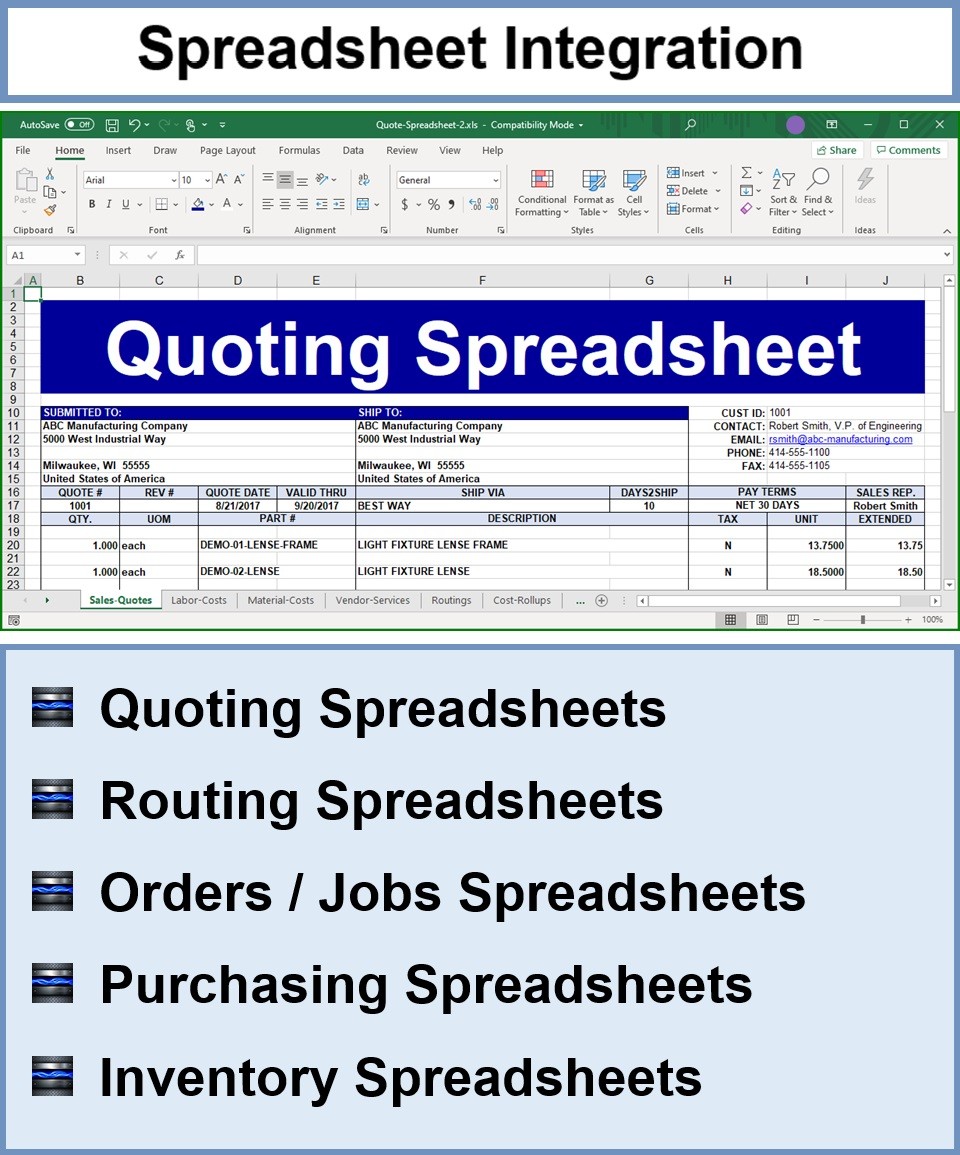
- Integrates Spreadsheets with Manufacturing Enterprise
- Provides Capabilities to Reduce Spreadsheet Dependency
- Provides Two-Way Integration with Spreadsheets and ERP
Supplement Your Spreadsheets with Advanced Technology
Optimizing Manufacturing Processes Through Spreadsheet Integration Software
In the landscape of modern manufacturing, spreadsheets have long been the unsung heroes—quietly supporting operational workflows, financial analysis, inventory management, and quoting procedures. Most manufacturing companies, regardless of size or sector, rely on Excel spreadsheets as the backbone of critical business processes. Their flexible nature, accessibility, and ease of use make them indispensable tools. Yet, as business demands evolve and data complexity increases, reliance on standalone spreadsheets can reveal significant limitations that hinder growth and efficiency.
The Ubiquity and Limitations of Spreadsheets
Despite their power, spreadsheets by nature are isolated repositories of information. Each spreadsheet functions as a silo, storing data unique to a particular department or process. As spreadsheets become more sophisticated, they begin to capture more tribal knowledge—nuanced, experience-based data that seldom gets documented elsewhere. This scenario often leads to the following challenges:
- Data Duplication: Multiple versions of the same spreadsheet are maintained across different teams, leading to conflicting data and confusion.
- Lack of Real-Time Updates: As market conditions change or material costs fluctuate, updating spreadsheets manually can be time-consuming and error-prone.
- Limited Collaboration: Sharing and merging information between departments or systems requires manual intervention, increasing the risk of miscommunication.
- Knowledge Islands: Critical business insights and processes become embedded in complex formulas and macros, accessible only to a few experts.
Elevating Spreadsheet Utility with Advanced Integration Technology
Recognizing these challenges, forward-thinking manufacturers are shifting their approach. Rather than replacing the spreadsheets that underpin their workflows, they are supplementing them with advanced spreadsheet integration software. This technology bridges the gap between disconnected spreadsheets and enterprise systems, unlocking new levels of efficiency and collaboration.Global Edge Engineering Assistant exemplifies this paradigm shift. Its innovative spreadsheet integration capabilities enable organizations to map and synchronize data between Excel and sophisticated enterprise platforms such as ERP (Enterprise Resource Planning) systems.
How Spreadsheet Integration Works
The core value of integration technology lies in its ability to facilitate two-way communication between spreadsheets and enterprise systems. This means that users can upload or download information seamlessly, ensuring that the data circulating within spreadsheets remains accurate, up-to-date, and accessible across the organization.
Consider a quoting spreadsheet—a vital tool for estimating costs and margins. Traditionally, updating this spreadsheet to reflect current time and material costs involves manual entry, cross-referencing with ERP databases, and potential errors. With integration software, the quoting spreadsheet can be directly mapped to the ERP system, enabling:
- Automatic updates reflecting changes in material costs or labor rates.
- Reduction in manual errors and time spent on redundant tasks.
- Enhanced visibility into cost structures for more accurate quotations.
Key Features and Benefits of Spreadsheet Integration
Global Edge Engineering Assistant’s spreadsheet integration capabilities offer a robust suite of features tailored for manufacturing environments. These include:
- Integration with Manufacturing Enterprise Systems: Connects spreadsheets with ERP, MES (Manufacturing Execution Systems), CRM, and other platforms to ensure a single source of truth for business data.
- Reduction of Spreadsheet Dependency: Automates data flows, reduces reliance on manual spreadsheet updates, and minimizes the risks associated with data silos.
- Two-Way Data Exchange: Allows both uploading (pushing data from spreadsheets to ERP) and downloading (pulling data from ERP into spreadsheets), so all stakeholders have access to the latest information.
- Centralized Data Governance: Establishes clear protocols for data ownership, version control, and security, ensuring compliance and integrity.
- Enhanced Reporting and Analytics: Leverages the power of enterprise reporting tools while maintaining the flexibility of spreadsheet-based analysis.
Transforming Manufacturing Operations
The impact of integrating spreadsheets with enterprise systems extends far beyond improved data accuracy. It enables manufacturers to:
- Accelerate Decision-Making: Real-time access to updated data across departments empowers managers to make informed decisions quickly.
- Increase Collaboration: Seamless sharing of information breaks down interdepartmental barriers, fostering teamwork and innovation.
- Optimize Resource Utilization: By reducing time spent on manual data entry and reconciliation, employees can focus on higher-value tasks.
- Respond to Market Changes: Dynamic integration ensures that companies can adapt to cost fluctuations, supply chain disruptions, or customer requirements without delay.
Addressing the Human Element
While technology is a powerful enabler, successful integration also depends on fostering a culture of collaboration and continuous improvement. As processes become more automated, it is vital to ensure that tribal knowledge—those unwritten rules and insights—are documented and shared. Training, change management, and open communication remain crucial components of any digital transformation.
Practical Implementation: Best Practices
For manufacturers seeking to supplement their spreadsheets with advanced technology, the following best practices can help maximize ROI:
- Start with a Needs Assessment: Identify which spreadsheets are most critical to your operations and where manual processes create bottlenecks.
- Engage Stakeholders Early: Involve end users, IT teams, and process owners in the integration project to ensure buy-in and relevance.
- Choose Scalable Solutions: Select integration technology that can grow with your business, supporting additional data sources and future requirements.
- Prioritize Data Integrity: Establish clear rules for data validation, ownership, and access control to prevent errors and security breaches.
- Invest in Training: Equip employees with the skills needed to leverage new tools and workflows effectively.
Case Example: Quoting Process Optimization
A mid-sized manufacturer previously relied on a complex quoting spreadsheet managed by a single expert. As material costs fluctuated, updating the spreadsheet required manual cross-referencing and frequent adjustments, which led to delays and pricing inaccuracies. By implementing Global Edge Engineering Assistant’s integration technology, the company mapped its spreadsheet directly to the ERP database, enabling automatic updates and version tracking. The result was:
- Faster turnaround times for quotations
- Improved pricing accuracy
- Reduced reliance on a single expert, ensuring business continuity
- Enhanced transparency for sales, finance, and supply chain teams
Looking Forward: Future Trends
The convergence of spreadsheets with advanced integration software is just the beginning. As technologies such as artificial intelligence, machine learning, and cloud computing continue to evolve, manufacturers will be able to further automate, analyze, and optimize their data flows. The end goal is to create a truly connected enterprise where every data point—whether in a spreadsheet, ERP, or cloud application—can inform smarter, faster decision-making.
Conclusion
Excel spreadsheets will likely remain a vital part of manufacturing operations for years to come. By supplementing them with advanced integration technology, companies can unlock new levels of efficiency, accuracy, and agility. Solutions like Global Edge Engineering Assistant demonstrate how two-way integration empowers businesses to break down silos, streamline workflows, and stay competitive in a fast-changing market. The future belongs to those who can bridge the gap between tradition and innovation—leveraging the familiar power of spreadsheets while embracing the transformative potential of advanced technology.
Reduce Spreadsheet Dependency
To see a demonstration as to how Global Edge Engineering Assistant can help reduce spreadsheet dependency, click on the link below to schedule a software demonstration.