Automated Sheet Metal Batch Unfolding
Blog Post 9.02.03 - Automatically Embed Extended Data into DXF Flat Files
Automate the generation of CAM bend programs with the proper Extended Data embedded into Your DXF flat files. Read More ...
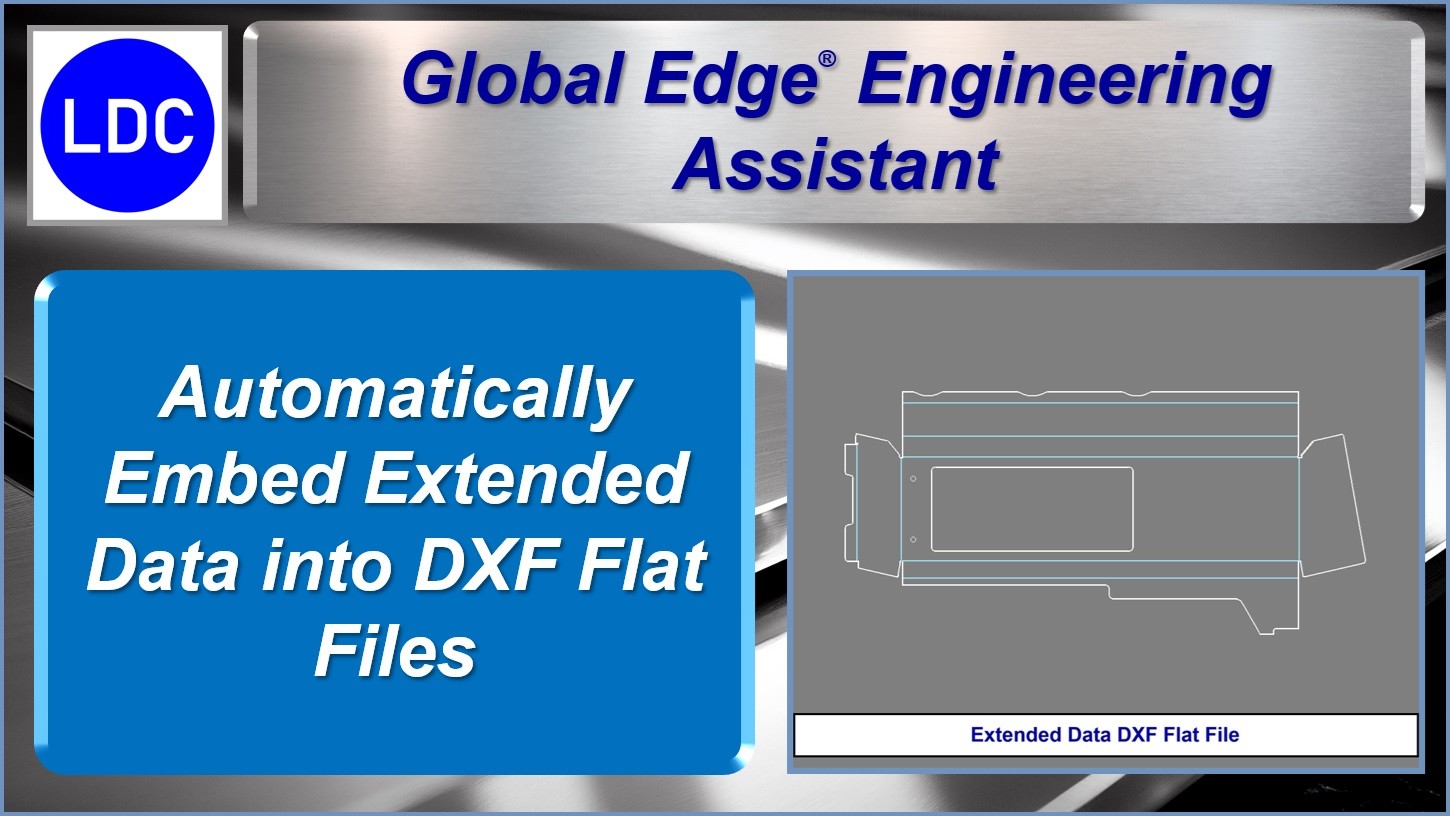
Global Edge Video Blog-9.02

Automatically Embed Extended Data into DXF Flat Files
The preparation of 3D Sheet Metal CAD Models and 2D DXF Flat Files for your nesting software and programming CAM bending programs can be a labor-intensive engineering workflow process. This includes the adjustment of bend radii to match the proper bending machine tool.
Global Edge Engineering Assistant can optionally integrate with your ERP and PDM / Document Control systems to process daily production with an Automated Production Work Queue. This includes the ability to automatically configure and adjust 3D Sheet Metal CAD Models to match daily production orders and produce nesting software ready DXF Flat Files. This also includes the automated integration of Extended Data into each DXF Flat File to facilitate Automated Bend Program Generation with the following features and benefits:
Global Edge Engineering Assistant can optionally integrate with your ERP and PDM / Document Control systems to process daily production with an Automated Production Work Queue. This includes the ability to automatically configure and adjust 3D Sheet Metal CAD Models to match daily production orders and produce nesting software ready DXF Flat Files. This also includes the automated integration of Extended Data into each DXF Flat File to facilitate Automated Bend Program Generation with the following features and benefits:


- Automated Sorting by Material & Thickness
- Automated Adjustment of Bend Radii by Machine Tool
- Automated Integration of Extended DXF Flat File Data
- Automates Manufacturing Engineering Process
- Eliminates Shop Floor Errors
As Global Edge Engineering Assistant processes sheet metal parts, this process includes an Automated CAD Part Analysis that imports and stores complete CAD part parameters and matches each sheet metal part with the appropriate bend process. This is subsequently followed with the automated addition of Extended DXF Data to each DXF Flat File to facilitate Automated Bend Program Generation with the following data:

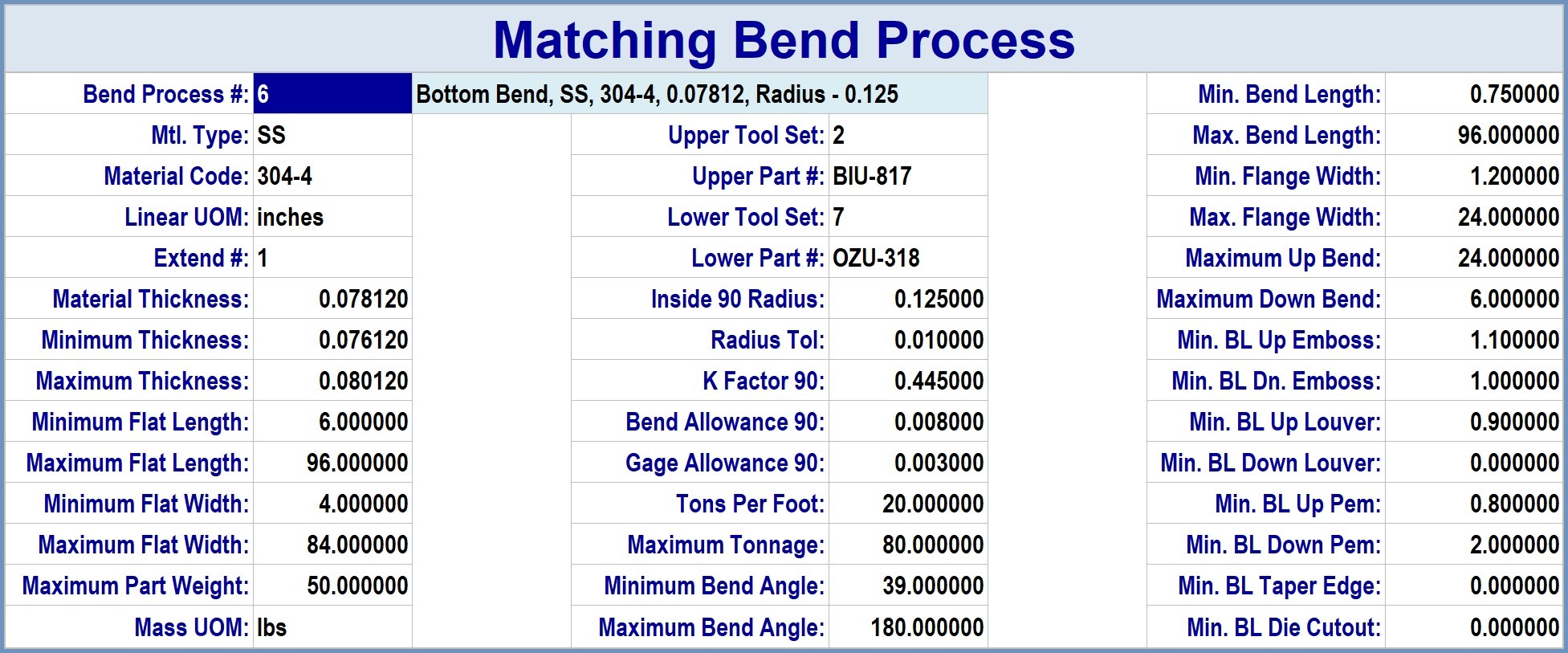
Automating the Embedding of Extended Data into DXF Flat Files for CAM Bend Program Generation
Streamlining Sheet Metal Fabrication Workflows with Intelligent Data Integration
In the fast-evolving landscape of manufacturing engineering, efficiency, accuracy, and automation have become essential pillars for maintaining a competitive advantage. Nowhere is this more apparent than in the preparation and processing of 3D Sheet Metal CAD Models and 2D DXF Flat Files, which are at the heart of modern sheet metal fabrication. The orchestration of these files—especially with the necessary Extended Data (XData) for Computer-Aided Manufacturing (CAM) bend program generation—can often be a labor-intensive and error-prone process, leading to costly delays and production errors on the shop floor.
The Challenge of Manual Data Preparation
Traditionally, the creation of DXF flat files with embedded Extended Data requires multiple steps. Engineers manually adjust bend radii to match the selected bending machine tool, sort files by material and thickness, and enter Extended Data (such as job numbers, part IDs, revision states, and specific production notes) for each part. These steps, though routine, are critical for ensuring that the correct information is passed downstream to nesting software and CAM programs that control bending machines.Manual processes, however, introduce several challenges:
- High labor costs, as skilled engineers spend significant time on repetitive file preparation tasks
- Increased risk of human error, resulting in incorrect bend data, missing identifiers, or mismatched tooling information
- Delays in production schedules, especially when handling fluctuating daily order volumes
- Difficulties in maintaining data traceability and revision control across multiple systems (CAD, ERP, PDM)
- Potential for shop floor errors, which can result in scrapped parts, machine downtime, and rework
The Solution: Automated Embedding of Extended Data into DXF Flat Files
To address these challenges, advanced automation solutions like Global Edge Engineering Assistant have emerged, offering powerful integration capabilities for the sheet metal fabrication workflow. These tools can automatically embed Extended Data into DXF flat files, orchestrate the sorting and adjustment of files based on material and thickness, and prepare bend program data tailored to the requirements of the target machine tool.
The key to this automation lies in the intelligent extraction, transformation, and embedding of data at critical points in the engineering workflow. By connecting to enterprise systems such as ERP (Enterprise Resource Planning), PDM (Product Data Management), and document control platforms, the automation solution can process daily production orders and dynamically configure 3D CAD Models. These models are then flattened into 2D DXF files, complete with the appropriate XData and ready for direct use in nesting and CAM bending programs.
Features of Automated DXF Extended Data Embedding
The automation process incorporates several advanced features that streamline manufacturing engineering:
Automated Sorting by Material and Thickness
The automation system evaluates each part's material and thickness specifications and organizes the resulting DXF files accordingly. This ensures proper nesting and material utilization on the shop floor, minimizes waste, and enables rapid batch processing for parts requiring the same stock.
Automated Adjustment of Bend Radii by Machine Tool
Different bending machines and tooling configurations require specific bend radii to produce accurate parts. The automation tool references the daily production work queue and automatically adjusts bend allowances and radii in the CAD model to match the actual machine tool that will be used in production. This eliminates the need for manual intervention and guarantees that bend data in the flat file aligns with machine capabilities.
Automated Integration of Extended DXF Flat File Data
Extended Data (XData) is essential for downstream processes, as it encodes information such as part number, job order, revision state, customer name, due date, and any special handling instructions. The automation solution maps Extended Data directly into the DXF file structure, ensuring that every file carries complete, up-to-date metadata for seamless handoff to nesting and CAM systems.
Automated Production Work Queue Integration
By integrating with ERP and PDM/document control systems, the automation software can pull real-time production orders and automatically prepare the relevant sheet metal parts in accordance with current demand. The automated work queue processes orders, configures models, and outputs DXF flat files ready for manufacturing—without manual touchpoints.
Automated Manufacturing Engineering Process
From the adjustment of bend radii to the embedding of Extended Data and file sorting, the entire pre-production engineering workflow can be automated. Engineers are freed from repetitive tasks and can redirect their focus towards process optimization, innovation, and quality assurance.
Benefits of Automation in Sheet Metal Fabrication
The automation of Extended Data embedding and CAM bend program generation delivers significant benefits to manufacturers, including:
- Increased Throughput: Automated workflows slash engineering time per part, enabling rapid processing of large order volumes and shorter lead times for customers.
- Reduced Error Rates: By eliminating manual data entry and decision points, the system significantly reduces the chances of shop floor errors, scrapped materials, and costly rework.
- Traceability and Compliance: Embedded metadata within each DXF file ensures that parts can be traced back to their source orders, revision levels, and production batches, aiding quality control and compliance with industry standards.
- Seamless Integration: The tight coupling between CAD, ERP, PDM, and CAM systems creates a digital thread across the entire production chain, supporting just-in-time manufacturing and agile production scheduling.
- Resource Optimization: By automating file sorting and bend program generation, material use is optimized, machine setup times are reduced, and technician labor is focused on value-added activities.
- Scalability: Automated systems can easily scale to support increased order quantities, multiple product lines, or new machine tool integrations, future-proofing the manufacturing operation.
Use Case: Automated CAM Bend Program Generation
Consider a medium-sized sheet metal fabricator processing daily production batches for a variety of customers. Each day, the production queue includes a mix of materials, thicknesses, and part numbers, each with unique bend requirements and customer specifications.
Prior to automation, the engineering team spends hours manually adjusting CAD models, flattening parts, exporting DXF files, and entering Extended Data by hand. CAM programmers must then interpret this data, set up bending sequences, and verify that machine parameters match the part requirements.
After implementing an automated solution:
- Production orders are imported directly from the ERP system.
- CAD models are automatically configured to match the required material and machine tool settings.
- DXF flat files are generated with all necessary Extended Data embedded.
- Files are sorted and routed to the appropriate nesting and CAM software for immediate program generation.
- The result is a streamlined engineering flow, faster turnaround, dramatically reduced error rates, and improved on-time delivery performance.
Conclusion
Automating the embedding of Extended Data into DXF flat files and the generation of CAM bend programs represents a transformative step for sheet metal fabrication operations. By leveraging intelligent automation and system integration, manufacturers can achieve new levels of efficiency, accuracy, and scalability—freeing engineering talent from routine tasks and paving the way for innovation and quality in every part produced. As the demands of modern manufacturing continue to evolve, such solutions will be increasingly vital for companies seeking to lead in the era of smart, connected production.