Manufacturability Testing
Blog Post 9.03.03 - Increase Profitability & Reduce Delivery Time with Manufacturability Testing
Manufacturability Testing can help increase profitability and reduce product delivery time by detecting potential design errors before reaching the shop floor. Read More ...

Global Edge Video Blog-9.03

Video can’t be displayed
Increase Profitability & Reduce Delivery Time with Manufacturability Testing
Global Edge Engineering Assistant provides innovative software technology that allows you to automatically perform a Manufacturability Test on sheet metal CAD parts. This is accomplished with software functionality that performs a complete part parameter analysis on a sheet metal part and stores this information in the Global Edge database.
The CAD Part Parameters are then automatically compared with bending machine tool parameters to determine if a sheet metal part can be successfully fabricated, which helps increase profitability and reduce delivery times. The CAD Part Parameters analyzed include the following:
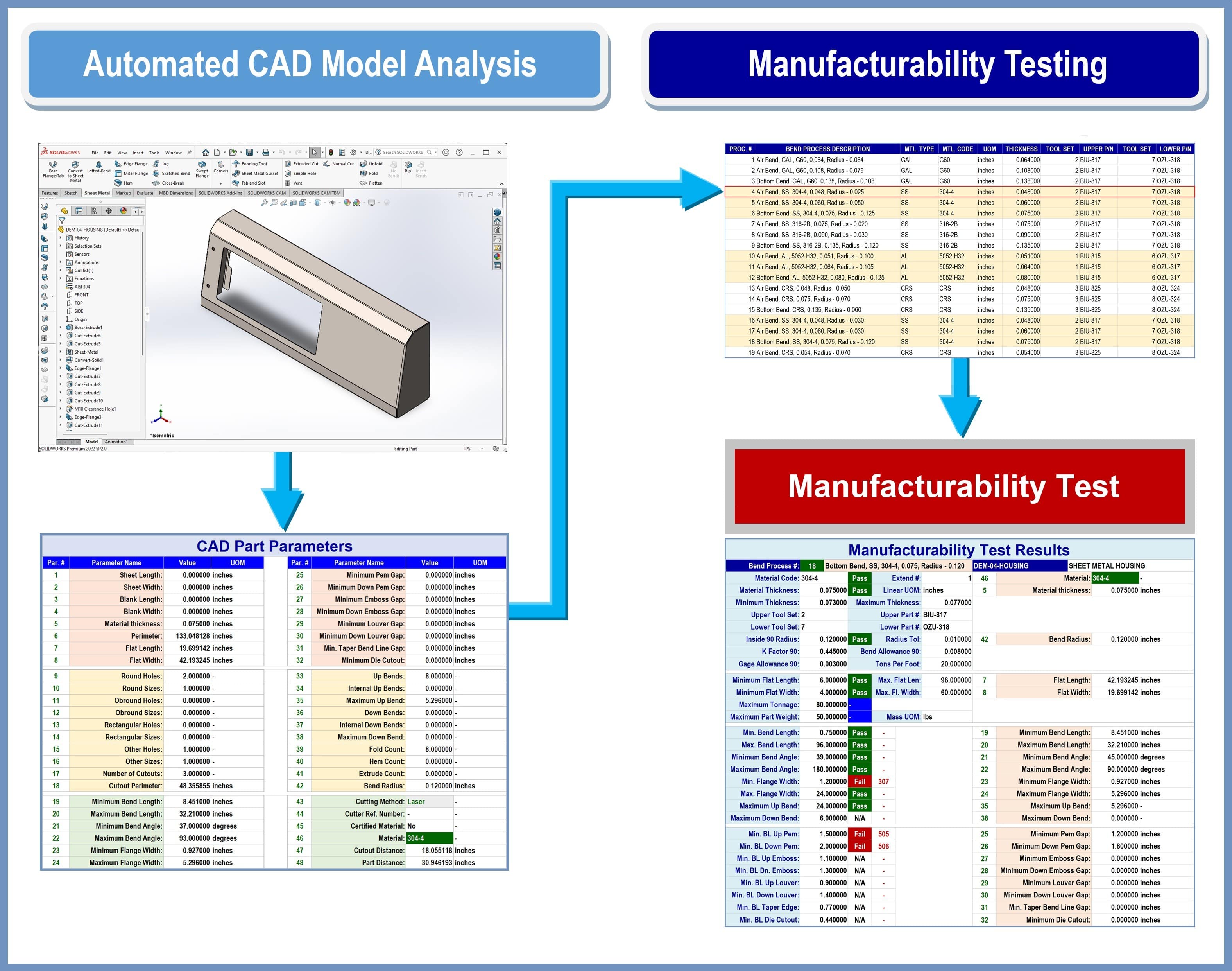
- Material / Thickness / Part Weight / Bend Radius
- Blank / Flat (Length & Width)
- Cutouts / Holes (Count & Size)
- Minimum / Maximum Bend Length
- Minimum / Maximum Bend Angle
- Minimum / Maximum Flange Width
- Minimum Pem Hole to Bend Line Gap
- Minimum Embossment to Bend Line Gap
- Minimum Louver to Bend Line Gap
- Maximum Up / Maximum Down Bend
- Fold / Hem / Extrude Counts
- Minimum Taper / Die Cut to Bend Line Gap
Enhancing Profitability and Reducing Delivery Time with Manufacturability Testing
How Automated Manufacturability Analysis Optimizes Sheet Metal Fabrication
In today’s competitive manufacturing landscape, the pressure to deliver high-quality products quickly and cost-effectively has never been greater. One of the most effective strategies for achieving these goals is through the implementation of manufacturability testing—an automated process that identifies potential design errors before production, streamlining workflow and maximizing profitability.
The Importance of Manufacturability Testing
Manufacturability testing is a proactive approach to product development. By examining Computer-Aided Design (CAD) models for potential issues at the design stage, manufacturers can avoid costly rework, production delays, and wasted materials. This early intervention ensures that design flaws are corrected before they reach the shop floor, where changes are more expensive and time-consuming.
Key benefits include:
- Reducing time-to-market by minimizing iterations between design and production.
- Lowering costs by preventing errors that lead to scrapped parts or additional engineering work.
- Improving overall product quality by ensuring designs are optimized for manufacturing processes.
Automated Manufacturability Testing with Global Edge Engineering Assistant
Global Edge Engineering Assistant represents a leap forward in manufacturability testing technology. This innovative software enables engineers and designers to automatically test the manufacturability of sheet metal CAD parts, providing immediate feedback and actionable insights.
Comprehensive Part Parameter Analysis
At the core of Global Edge’s technology is a powerful part parameter analysis engine. This system analyzes every critical aspect of a sheet metal part and stores the information in the Global Edge database for easy tracking and reference.
The parameters evaluated include:
- Material, Thickness, and Part Weight: Ensuring material compatibility and weight constraints for both manufacturability and end-use requirements.
- Bend Radius: Confirming that bends meet minimum allowable radii for the selected material and tooling.
- Blank/Flat Dimensions (Length & Width): Assessing whether the flat layout fits within raw material stock and bending equipment limitations.
- Cutouts and Holes (Count & Size): Reviewing the number and size of features for manufacturability and tool access.
- Minimum/Maximum Bend Length: Ensuring bends can be performed with available brakes or press tools.
- Minimum/Maximum Bend Angle: Verifying angles are feasible given the material and tooling constraints.
- Minimum/Maximum Flange Width: Confirming flanges are not too narrow or wide for forming operations.
- Minimum Pem Hole to Bend Line Gap: Preventing interference between fastener holes and bend lines.
- Minimum Embossment to Bend Line Gap: Ensuring embossed features do not conflict with bends.
- Minimum Louver to Bend Line Gap: Reviewing louver placements for manufacturability.
- Maximum Up/Down Bends: Checking complex bending sequences for feasibility.
- Fold/Hem/Extrude Counts: Counting these features to ensure they are within process capabilities.
- Minimum Taper/Die Cut to Bend Line Gap: Avoiding issues related to taper or die-cut features near bends.
Automatic Comparison with Machine Tool Parameters
The real power of the Global Edge system lies in its ability to automatically compare analyzed CAD part parameters with the actual capabilities of bending machines and other fabrication tools. This ensures that every part designed can be successfully fabricated on available equipment, eliminating guesswork and manual checks that often slow down engineering teams.
Impact on Profitability and Delivery Time
By leveraging automated manufacturability testing, manufacturers can experience dramatic improvements in both profitability and delivery speed.
- Fewer Production Bottlenecks: Early error detection means fewer unexpected issues on the shop floor, allowing for smooth, uninterrupted production.
- Optimized Resource Allocation: Preventing rework and scrap reduces material and labor costs, directly boosting the bottom line.
- Accelerated Lead Times: As manufacturability is assured before production begins, parts move swiftly through the fabrication process to final delivery.
- Enhanced Customer Satisfaction: Reliable delivery times and consistent part quality strengthen customer relationships and drive repeat business.
Conclusion
Manufacturability testing, especially when automated by advanced software like Global Edge Engineering Assistant, is an essential tool for modern sheet metal fabrication. By rigorously analyzing part parameters and ensuring compatibility with machine tools, manufacturers can detect design errors early, control costs, and deliver products to market faster than ever before. The result is a competitive edge defined by increased profitability, reduced delivery times, and a reputation for excellence in engineering and manufacturing.
Eliminate Shop Floor Errors With Manufacturability Testing
To see a demonstration as to how Global Edge Engineering Assistant can eliminate shop floor errors with Manufacturability Testing, click on the link below to schedule a software demonstration.